Narcissistic Personality Disorder
Database
* This website does not claim to cover 100% of all information, nor provide 100% accuracy in all domains. Please use our citations for further research and understand that all psychology is subject to change and interpretation
FAQ
Am I a narcissist?
This website cannot diagnose you, only a trained psychologist can
My boyfriend / mother / friend / cousin / sister / grandpa / dog / third cousin twice removed / ex bestie / great aunt is a narcissist!
You cannot diagnose someone else with narcissism unless you are a trained and certified psychologist. It does not matter what they said or did to you, you are not qualified to make that determination
Is [insert celebrity or politician here] a narcissist?
As previously stated, diagnosing a person without training and the ability to actually speak to that person directly is impossible. Armchair diagnosis is not a valid diagnosis, and this applies to public figures too. Setting that fact aside, NPD can develop from excessive spoiling, so it is entirely possible for people who grow up rich and famous to develop narcissistic traits or narcissistic personality disorder
But all narcs want to destroy empaths with their demonic energy!
Unlike the concept of an "empath", narcissistic personality disorder is based in science. Feeling empathy is a natural occurrence and does not give you divine powers, just like lacking empathy does not give you demonic powers. Your own spiritual beliefs are not scientific and cannot be compared to NPD in any real psychology. If you have your own practices and beliefs, you must respect that they have no place in science-based discussions
Can narcissists feel love?
Love is a social construct and defined by each individual and their own unique experiences. Yes, people with NPD are capable of feeling forms of love, but their opinion of what love is may be different than a non-disordered person. Love for a narcissist may be based in thoughts more than feelings, such as: "My deep respect for this person has transformed into love" instead of "This person makes me feel warm and fuzzy". Their love may also be conditional, frequently changing, or ambiguous. Someone with NPD may experience splitting, similar to that of someone with BPD, and be unable to reliably decide whether their love for a person is genuine. They may also have exceptions to their narcissism, meeting a person (or pet) who is important enough to them that their disorder does not prevent them from having healthy emotional attachment.
But what do I call them if I think someone is a narcissist?
”Narcissist” was coined in psychology to describe a disorder, not someone’s personality traits or actions. The only person who can decide if someone is a narcissist is that person’s own personal therapist, not their partner, family, ex, or otherwise. If you think someone you know is “narcissistic”, you still should not use that word, as it is offensive to people who actually have this disorder and is an incorrect usage of the word. It was coined with the intention of it being used diagnostically by psychologists, not casually by the average person.Still not sure what words to use? Try these:Alternatives for narcissistic: selfish, egoistic, solipsistic, conceited, self-centered, vain, self-obsessed, self-absorbed, egocentric, self-interestedAlternatives for narcissist: egoist, egocentric, braggart, selfish personAlternatives for narcissism: egoism, egocentricity, vanity, conceit, arrogance, boastfulness, haughtiness, overconfidence
Diagnostic Criteria
DSM-5-TR
"In interpersonal settings, there is a pervasive pattern of grandiosity, need for admiration, and lack of empathy.This pattern of behaviors onsets in early adulthood and persists through various contexts. Clinical features include at least 5 of the following:- Having a grandiose sense of self-importance, such as exaggerating achievements and talents, expecting to be recognized as superior even without commensurate achievements
- Preoccupation with fantasies of success, power, beauty, and idealization
- Belief in being "special" and that they can only be understood by or associated with other high-status people (or institutions)
- Demanding excessive admiration
- Sense of entitlement
- Exploitation behaviors
- Lack of empathy
- Envy towards others or belief that others are envious of them
- Arrogant, haughty behaviors and attitudes" [1]
Breakdown of Feature Examples
1. Having a grandiose sense of self-importance, such as exaggerating achievements and talents, expecting to be recognized as superior even without commensurate achievements
- bragging about achievements by lying or exaggerating the truth
- making up stories to impress others
- believing everyone should automatically know you're better than them and treat you as such
- thinking you're more important than anyone else
2. Preoccupation with fantasies of success, power, beauty, and idealization
- constantly thinking about being worshipped and respected like you think you deserve
- believing you would be the best ruler of your country and imagining all the scenarios in which you're the one in power of everyone
- holding the belief that you could become a powerful politician or successful influencer or model if you really put in the effort
- having maladaptive daydreams that transfer over into reality, the belief that your dreams of power should play out in reality
3. Belief in being "special" and that they can only be understood by or associated with other high-status people (or institutions)
- thinking you are especially unique and interesting
- believing people can sense your superiority and should automatically respect you for it
- thinking you would be great friends with celebrities or politicians if they only met you
- believing most or all people are not good enough for you and that you must always have high standards for your friends, partner, job, college, etc.
4. Demanding excessive admiration
- never being satisfied until people compliment you, chasing constant praise from the people around you
- needing to always be the center of attention or the most valued in a room
- feeling like a victim when others don't compliment or validate you constantly
- not being able to function without praise and constantly chasing ways to feed your ego
5. Sense of entitlement
- always needing to be first place and believing that if you lose it must be due to cheating or unfairness
- thinking you deserve the best of things and you should always get first pick
- placing yourself on the top of social hierarchies, even in dynamics where you have a superior or equal (such as work or friendships)
- expecting others to give you gifts and praise you, even though you don't return the favor
- expecting all people to be attracted to you, even if you aren't attracted to them
- believing your opinion is always right and people shouldn't try to prove you wrong
6. Exploitation behaviors
- giving false flattery or placating others so they will give you what you want
- playing victim for attention, constantly seeking praise and reassurance without returning the favor for others
- only dating or befriending people for their money, power, or attention and leaving as soon as you get bored
7. Lack of empathy
- feeling little to nothing when the people close to you are in emotional or physical pain
- refusing to comfort others when they're sad or sick
- having no issue with manipulating or using others
- lacking emotional depth and the ability to have deep and lasting emotional intimacy and love
- hurting others on purpose to build yourself up
- being angry or annoyed when others cry or show emotion in front of you
- using words and gestures of compassion to seem like a good person despite not caring about them
8. Envy towards others or belief that others are envious of them
- constantly comparing yourself to others and feeling extreme sadness, rage, or resentment towards people who have more attention, power, money, or beauty than you
- wanting to hurt or defeat people you perceive as better than you
- having extreme body dysmorphia, disordered eating, or an obsession with being the most beautiful, skinny, fit, or sexy
- believing anyone who disagrees with or dislikes you must be jealous of your superiority
- wanting everyone to want to be like you, expecting others to act worshipful towards you
- dressing provocatively or dramatically for attention, wanting to always impress and ourshine others
9. Arrogant, haughty behaviors and attitudes
- being snarky and aggressive or passive aggressive
- saying whatever you want because you think your opinions are the best ones
- being boastful, degrading, or excessively competetive
- constantly thinking about how good you are, being obsessed with mentally judging others to make yourself feel better
- devaluing people over small things, switching back and forth between treating people well, then despising and disregarding them
ICD-11
The ICD previously included distinct personality disorders, including NPD, but they were removed and replaced with a diagnostic system that combines severity level with associated traits. I have included the associated trait category that most applies to narcissistic personality disorder, although it is a combination of antisocial and narcissistic behaviors.
MILD PERSONALITY DISORDER
"All general diagnostic requirements for Personality Disorder are met. Disturbances affect some areas of personality functioning but not others (e.g., problems with selfdirection in the absence of problems with stability and coherence of identity or selfworth), and may not be apparent in some contexts. There are problems in many interpersonal relationships and/or in performance of expected occupational and social roles, but some relationships are maintained and/or some roles carried out. Specific manifestations of personality disturbances are generally of mild severity.
Mild Personality Disorder is typically not associated with substantial harm to self or others, but may be associated with substantial distress or with impairment in personal, family, social, educational, occupational or other important areas of functioning that is either limited to circumscribed areas (e.g., romantic relationships; employment) or present in more areas but milder" [2].MODERATE PERSONALITY DISORDER
"All general diagnostic requirements for Personality Disorder are met. Disturbances affect multiple areas of personality functioning (e.g., identity or sense of self, ability to form intimate relationships, ability to control impulses and modulate behaviour). However, some areas of personality functioning may be relatively less affected. There are marked problems in most interpersonal relationships and the performance of most expected social and occupational roles are compromised to some degree. Relationships are likely to be characterized by conflict, avoidance, withdrawal, or extreme dependency (e.g., few friendships maintained, persistent conflict in work relationships and consequent occupational problems, romantic relationships characterized by serious disruption or inappropriate submissiveness). Specific manifestations of personality disturbance are generally of moderate severity. Moderate Personality Disorder is sometimes associated with harm to self or others, and is associated with marked impairment in personal, family, social, educational, occupational or other important areas of functioning, although functioning in circumscribed areas may be maintained" [2].SEVERE PERSONALITY DISORDER
"All general diagnostic requirements for Personality Disorder are met. There are severe disturbances in functioning of the self (e.g., sense of self may be so unstable that individuals report not having a sense of who they are or so rigid that they refuse to participate in any but an extremely narrow range of situations; self view may be characterized by self-contempt or be grandiose or highly eccentric). Problems in interpersonal functioning seriously affect virtually all relationships and the ability and willingness to perform expected social and occupational roles is absent or severely compromised. Specific manifestations of personality disturbance are severe and affect most, if not all, areas of personality functioning. Severe Personality Disorder is often associated with harm to self or others, and is associated with severe impairment in all or nearly all areas of life, including personal, family, social, educational, occupational, and other important areas of functioning" [2].
PROMINENT PERSONALITY TRAITS OR PATTERNS
(Only to be combined with a Personality disorder category)Dissociality in personality disorder or personality difficulty
"The core feature of the Dissociality trait domain is disregard for the rights and feelings of others, encompassing both self-centeredness and lack of empathy. Common manifestations of Dissociality, not all of which may be present in a given individual at a given time, include: self-centeredness (e.g., sense of entitlement, expectation of others’ admiration, positive or negative attention-seeking behaviours, concern with one's own needs, desires and comfort and not those of others); and lack of empathy (i.e., indifference to whether one’s actions inconvenience hurt others, which may include being deceptive, manipulative, and exploitative of others, being mean and physically aggressive, callousness in response to others' suffering, and ruthlessness in obtaining one’s goals)" [2].
1. NIH: Narcisstic Personality Disorder2. ICD-11 Classification of Mental and Behavioral Disorders
Subtypes
Millon's Subtypes
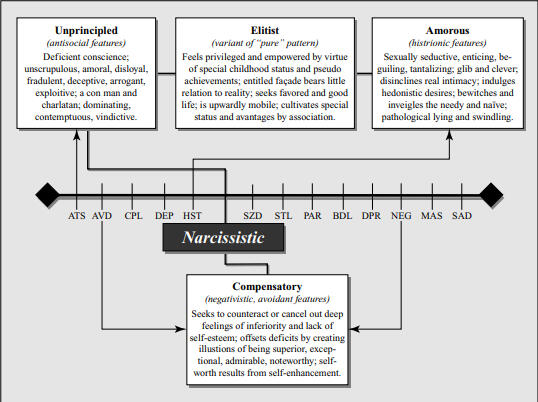
"Few individuals in real life exist as the incarnation of an abstract psychological ideal. Instead, most persons combine aspects of two or more personality styles, though some combinations are more common than others. Whereas the previous section sharpened the contrast between various prototypes for explanatory purposes, in this section we portray narcissistic variants that are found as the disorder begins to shade toward other personalities (see Figure 10.2 for a summary). Actual cases may or may not fall into one of these combinations" [3].
THE UNPRINCIPLED NARCISSIST
"Unprincipled narcissists combine the self-confidence of the narcissist with the recurrent aberrant behavior of antisocial personality patterns. Many of these individuals achieve success in society by exploiting legal boundaries to the verge of unlawfulness. Others may inhabit drug rehabilitation programs, centers for youth offenders, and jails and prisons. Still others are opportunists and con men, who take advantage of others for personal gain. Most people who demonstrate a pattern combining these styles are vindictive and contemptuous of their victims. Whereas many narcissists have normal superego development, unprincipled narcissists are skilled in the ways of social influence but have few internalized moral prohibitions. They are experienced by others as unscrupulous, amoral, and deceptive. More than merely disloyal and exploitive, these narcissists show a flagrant indifference to the welfare of others, a willingness to risk harm, and fearlessness in the face of threats and punitive action. Vengeful gratification is often obtained by humiliating and dominating others. Joy is obtained by gaining the trust of others and then outwitting or swindling them. Their attitude is that those who can be taken advantage of deserve it."Because they are focused on their own self-interest, unprincipled narcissists are indifferent to the truth. If confronted, they are likely to display an attitude of justified innocence, denying their behavior through a veneer of politeness and civility. If obviously guilty, they are likely to display an attitude of nonchalance or cool strength, as if the victim were to blame for not having caught on sooner. To them, achievement deficits and social irresponsibility are justified by expansive fantasies and frank lies. Those who display more antisocial traits may put up a tough, arrogant, and fearless front, acting out their malicious tendencies and producing frequent family difficulties and occasional legal entanglements. Relationships survive only as long as the narcissist has something to gain. So strong is their basic self-centeredness and desire to exploit others that people may be dropped from their lives with complete indifference to the anguish they might experience or how their lives will be affected. In many ways, the unprincipled narcissist is similar to the disingenuous histrionic (a combination of histrionic and antisocial patterns; see Chapter 9). The unprincipled narcissist preys on the weak and vulnerable, enjoying their dismay and anger. In contrast, the disingenuous histrionic seeks to hold the respect and affection of those they dismiss in their pursuit of love and admiration" [3].
THE COMPENSATORY NARCISSIST
"The compensatory variant essentially captures the psychoanalytic understanding of the narcissistic personality (discussed in a later section of this chapter). The early experiences of compensating narcissists are not too dissimilar to those of the avoidant and negativistic personalities. All have suffered 'wounds' early in life. Rather than collapse under the weight of inferiority and retreat from public view, like the avoidant, or vacillate between loyalty and anger, like the negativist, however, the compensating narcissist develops an illusion of superiority. Life thus becomes a search to fulfill aspirations of status, recognition, and prestige. Every small certificate and plaque the individual has ever received may be displayed on the office wall, for example. At other times, they may bore others while they present a complete biography of their most minuscule successes and achievements."Like avoidant personalities, compensating narcissists are exceedingly sensitive to the reactions of others, noting every critical judgment and feeling slighted by every sign of disapproval. Unlike avoidants, however, they seek to conceal their deep sense of deficiency from others and from themselves by creating a façade of superiority. Though they often have a degree of insight into their functioning, they nevertheless indulge themselves in grandiose fantasies of personal glory and achievement. Some procrastinate in doing anything effective in the real world for fear of evaluation. Instead of living their own lives, they often pursue the leading role in a false and imaginary theater unrelated to the real world. When threatened with reality, they may defend themselves by becoming more and more arrogant and dismissive until the offending stimulus withdraws. If reality overturns their illusion completely, compensating narcissists may retreat more and more into an imaginary world of others who recognize their supposed accomplishments" [3].
THE AMOROUS NARCISSIST
"Amorous narcissists, who represent a blend of the core narcissistic temperament with traits of the histrionic, are often defined by the game of erotic seduction they play with objects of their affection. Their skill lies in enticing and tempting the emotionally needy and naïve, while fulfilling their own hedonistic desires and sexual appetites as they deem necessary. Although their game plan usually implies the possibility of an exclusive relationship, they are not inclined toward genuine intimacy, instead choosing to romance a number of potential conquests simultaneously. Some are sexual athletes whose designs call simply for sexual exploitation. They may seem to desire the warm affection of a genuine relationship, but when they find it, they usually feel restless and unsatisfied. Repeated demonstrations of sexual prowess often become an obsession, with 'victory' only reinforcing their sense of narcissistic power. Having won others over, they quickly devalue their lovers and feel the need to continue their game elsewhere."For the most part, their partners simply provide a warm body that they can temporarily exploit before boredom overtakes them. As such, amorous narcissists leave behind them a trail of sexual excesses and intricate lies as they maneuver their way from one pathological relationship to another. Confrontation, criticism, and punishment are unlikely to make them change their ways. Narcissists quickly dismiss such carping as the
product of jealous inferiors. More than most, the amorous variety is likely to exhibit substantial body narcissism, attending scrupulously to physical appearance, clothes, and other external attributes" [3].
THE ELITIST NARCISSIST
"The elitist narcissist is somewhat reminiscent of Wilhelm Reich’s (1933) 'phallicnarcissist character.' Such individuals are self-assured, arrogant, energetic, 'impressive in . . . bearing' and 'ill-suited to subordinate positions among the rank and file' (W. Reich, 1949, pp. 217–218). Like the compensating variant, these individuals construct a false façade, but one that amplifies an already superior self-image, not one that compensates for deep feelings of inferiority. Theirs is a fear, not of being inadequate, but of being ordinary."Reich’s phallic-narcissists, he asserted, were to be found among military men, pilots, and athletes. Real-world historical figures Napoleon and Mussolini serve as examples of the classic character. In today’s Western society, we might add to this list many modern-day lawyers, surgeons, entrepreneurs, and other professions that naturally resonate with a swollen, aggressive courage Reich regarded as the cardinal trait of the phallic-narcissist. When carried to the logical extreme, such individuals fancy themselves as demigods who stand as a race apart from ordinary human beings, competing against one another for victory on the world stage with only a handful of worthy competitors. Many hold the common person in such contempt that they may be said to possess traits of the sadistic personality as well. However, the concept of the elitist narcissist is somewhat broader than Reich’s phallic-narcissist. Whereas elitist narcissists revel in displays of power, the exhibitionism of raw self-assertion may also be focused on intellectual ability or the privilege of accumulated wealth; there are many ways to be swollen with aggressive confidence. Such individuals attend the most prestigious schools and academies, join exclusive fraternities, and associate only with members of their own social class."Moreover, elitists are known to flaunt symbols of their status and achievement. Most idolize recognition and engage heavily in self-promotion. In whatever domain of activity interests them, they advertise themselves, brag about their achievements (whether substantive or fraudulent), and make everything they have done appear wonderful and impressive. Unrivaled in the pursuit of becoming 'Number 1,' many elitists actively create comparisons between themselves and others, turning personal relationships into public competitions and contests. By making excessive claims about themselves, elitist narcissists expose a great divide between their actual selves and their self-presentation. Many other narcissistic personalities recognize such disparities in themselves, but elitists are absolute in their belief of their grandeur. Rather than backing off, withdrawing, or feeling shamed when responded to with indifference, elitists accelerate their efforts all the more, acting increasingly and somewhat erratically to exhibit deeds and awards worthy of high esteem. They may present grandiose illusions about their powers and future status, amplify their limited accomplishments, and compete foolishly against others who have already eclipsed them in reality. Through such self-protective behaviors, elitists frequently alienate those around them, depriving themselves of the admiration and recognition they so desperately require, thus contributing further to their own troubles" [3].
Empirical Subtypes
OVERVIEW
"A number of prominent theorists have suggested various subtype distinctions of narcissism. Most of these subtypes can be conceptualized as a distinction between the more overt/grandiose presentation and the more covert/ vulnerable presentation. The overt form has also been referred to as grandiose, oblivious, willful, exhibitionist, thick-skinned, or phallic; the covert form has been referred to as vulnerable, hypersensitive, closet, or thin-skinned (Akthar & Thomson, 1982; Bateman, 1998; Britton, 2000; Cooper, 1981; Gabbard, 1989; Masterson, 1981; Rosenfeld, 1987; Wink, 1991). The overt type is characterized by grandiosity, attention seeking, entitlement, arrogance, and little observable anxiety. Consistent with the description of NPD in the DSM, these individuals can be socially charming despite being oblivious of others’ needs, interpersonally exploitative, and envious. In contrast, the covert type is hypersensitive to others’ evaluations, inhibited, manifestly distressed, and outwardly modest. Gabbard (1989) described these individuals as shy and 'quietly grandiose,' with an 'extreme sensitivity to slight,' which 'leads to
an assiduous avoidance of the spotlight' (p. 527). The covert type can also express grandiosity through an overidentification with suffering and distress (e.g., they suffer more than anyone else)" [4].
GRANDIOSE / OVERT
vs
VULNERABLE / COVERT
| Grandiose / Overt | Vulnerable / Covert | |
|---|---|---|
| Visibility | Narcissism is more obvious to others | Narcissism is less or not obvious to others |
| Insecurities | Deeply buried or suppressed | At the surface and distressing |
| Response to Criticism | Anger and hostility towards others | Pity and loathing towards self |
| Social Style | Often charismatic and/or confident | Often introverted and/or reserved |
| Vulnerability | Hides and denies weaknesses | Uses or exaggerates suffering for attention |
| Arrogance | Boastful and self-inflating | Fakes humility and humble brags |
| Anger Management | Attacks directly with insults | Passive aggressive tactics like silent treatment or withholding affection |
| Apologizing | Avoids admitting to mistakes if able to | Gives insincere apologies to avoid looking bad |
| Compassion | Not as motivated to show compassion | Demonstrates compassion to hide their lack of empathy |
Other Subtypes
These subtypes are all unofficial presentation terms and not all people with NPD will fall into any of them, while others may fall into one or more.
SOMATIC
- Narcissism is primarily tied to a body obsession- Often comorbid with eating disorders and body dysmorphia- Unhealthy belief in or obsession with being the most attractive- Sometimes associated with hypersexuality or frequent romantic partners- May be materialistic and drawn to the idea of flaunting wealth
CEREBRAL
- Narcissism is primarily tied to an obsession with intelligence- Highly competitive, even in casual competitions like board games- Unhealthy belief in or obsession with being the smartest in the room- Often intentionally tries to make others feel stupid- Frequently brags and exaggerates achievements
ANTAGONISTIC
- Competetive and combative- Often gets supply from negative attention and exploiting others- Belittling and confrontational, often starting arguments intentionally- Verbally aggressive, not necessarily physically aggressive- May be present alongside cerebral narcissism
MALIGNANT
- Aggressive and intentionally malicious- Often comorbid with Antisocial Personality Disorder or traits of it- Displays a disregard for or lack of healthy morals- More likely to be physically abusive or get into frequent fights- Lack guilt for their actions or the people they hurt
COMMUNAL
- Seeks supply through doing "good deeds" for attention- Fakes empathy and affection to be seen as a good person- Often associated with spiritual narcissism, the use of religion or spirituality as a source of grandiosity- Arrogant and boastful, while attempting to look humble- May be much less likely to be self aware of their own narcissism
Possible Causes
"It's not known what causes narcissistic personality disorder. The cause is likely complex. Narcissistic personality disorder may be linked to:Environment — parent-child relationships with either too much adoration or too much criticism that don't match the child's actual experiences and achievements.Genetics — inherited characteristics, such as certain personality traits.Neurobiology — the connection between the brain and behavior and thinking" [5].The following explanations are incomplete examples of the many perspectives and studies on the causes of NPD, and we recommend further research to gain a more full understanding of what current research suggests.
ENVIRONMENT
One of the strongest current theories for what causes NPD is childhood trauma and/or attachment trauma.The theory suggests that NPD, alike many other personality disorders, is primarily developed as a result of ACEs (Adverse Childhood Experiences). More specifically, some psychologists suggest that grandiose narcissism is more associated with excessive spoiling by caregivers and vulnerable narcissism is more associated with childhood trauma such as abuse (click to see more on grandiose/vulnerable Subtypes) [6].It has also been suggested that narcissism can run in families due to parenting styles. Overvaluation in families can lead to narcissism as well as abuse from a narcissistic parent. This study demonstrates how narcissistic parents' behavior can lead to the development of narcissism in their children: "...we presented how a child can learn to act in a narcissistic way. This is discussed under the parental influence while (a) being offline and; while (b) using the social media. It was observed, that in both of the scenarios...the child tried to imitate the parent’s behavior both online and offline" [9].Also interesting is the theory that narcissism can be greatly influenced by trauma occurring later in life, not just childhood. This is something that is seen often in patients with NPD who develop more severe narcissism in adulthood due to the inability or refusal to integrate into society [6].
GENETICS
Other studies suggest that certain elements of narcissism are highly heritable and can be passed down generationally.In a study using twins to compare the roles of genetic and environmental influences over the development of narcissism, it was found that, "The two dimensions of narcissism, intrapersonal grandiosity [23%] and interpersonal entitlement [35%], are heritable and largely independent of each other in terms of their genetic and environmental sources" [7]. These results suggest that there is an clinically significant element of genetic predisposition to narcissistic traits."The findings have important implications. First, these results deepen our understanding of the heritability of narcissism: not only global narcissism is heritable [6]–[10], but its dimensions, in particular, intrapersonal grandiosity and interpersonal entitlement, are also heritable, suggesting neither grandiosity nor entitlement is trivial according to the first law of behavioral genetics [39]. Second, consistent with behavioral evidences [24]–[28], our twin study shows that the differential nature of intrapersonal grandiosity and interpersonal entitlement has genetic and environmental bases..." [7].
NEUROBIOLOGY
The use of neurobiology - the biology of the nervous system - is another angle that has been taken to examine narcissism. In the following study, many possible connections between NPD and neurobiology are discovered, but these are just two examples of results found:"Grandiose narcissism is related to neurophysiological stress reactions indicative of vigilance to actual or anticipated ego threat, which points to vulnerable aspects of grandiose narcissism that are not commonly apparent in self-report research. These reactions manifest in increased salience network activation in the dACC, AI, and partly, also in the ventral/subgenual ACC, as well as increased autonomic (sympathetic; systolic blood pressure) and neuroendocrine (cortisol) indicators. Stressful responses to stimuli occur only for self-relevant material; reactions to aversive stimuli that are self-related but not self-relevant can be 'cool'" [8]."Individuals with higher levels of pathological and grandiose narcissism display lowered reactions to social stimuli in the AI in high-level paradigms. The AI also shows altered baseline activity in relation to narcissism, and is implicated in intrapersonal processing in narcissism. Though the results seem to be more in line with the notion of a reduced capacity than a reduced propensity for empathic reactions, more research will be needed to elucidate the involved mechanisms" [8].
5. Mayo Clinic: Narcissistic Personality Disorder6. Adverse childhood experiences leading to narcissistic personality disorder: a case report7. A Behavioral Genetic Study of Intrapersonal and Interpersonal Dimensions of Narcissism8. Can neuroscience help to understand narcissism? A systematic review of an emerging field9. Healing the next generation: an adaptive agent model for the effects of parental narcissism
Comorbidity
What the DSM-5-TR says
"Narcissistic personality disorder is associated with depressive disorders
(persistent depressive disorder and major depressive disorder), anorexia
nervosa, and substance use disorders (especially related to cocaine). Histrionic, borderline, antisocial, and paranoid personality disorders may
also be associated with narcissistic personality disorder" [10].
There may be conflicting statistics depending on the recency, location, and quality of each source of data. We encourge that you do your own research to find other studies that may have different results.
ASPD
About 25% people with NPD have antisocial personality disorder [11]
BPD
Up to 37% people with NPD have borderline personality disorder [12]
HPD
About to 32% people with NPD have histrionic personality disorder [13]
PPD
More than 43% of people with NPD have paranoid personality disorder [14]
Bipolar Disorder
Almost 39% people with NPD have Bipolar Disorder [12]
PTSD
Having PTSD makes you 2.1 - 2.5 times more likely to have NPD [15]
Substance Use Disorder
Almost 35% of people with NPD have a substance use disorder [16]
Autism Spectrum Disorder
Although only becoming a topic of conversation recently, it has been suggested that there is a connection between autism and NPD, more specifically low support needs autism and covert vulnerable narcissism, [17]. This may be a result of the shame and attachment trauma that many autistics face in their childhood, as it has been proven that "...adults with ASD are more than four times likely to be diagnosed with PTSD" [18].
10. DSM-5-TR11. Differentiating Narcissistic and Antisocial Personality Disorders12. Prevalence, Correlates, Disability, and Comorbidity of DSM-IV Borderline Personality Disorder: Results from the Wave 2 National Epidemiologic Survey on Alcohol and Related Conditions13. Clinical Characteristics of Comorbid Narcissistic Personality Disorder in Patients with Borderline Personality Disorder14. Associations Between Four Types of Childhood Neglect and Personality Disorder Symptoms During Adolescence and Early Adulthood: Findings of a Community-Based Longitudinal Study15. Personality Disorders Associated with Full and Partial Posttraumatic Stress Disorder in the U.S. Population: Results from Wave 2 of the National Epidemiologic Survey on Alcohol and Related Conditions16. Narcissistic Personality Disorder: Symptoms, Diagnosis & Getting Help17. Traits of narcissistic vulnerability in adults with autism spectrum disorders without intellectual disabilities18. Autism, Adverse Events, and Trauma
Societal Usage of "Narcissist"
History of the word
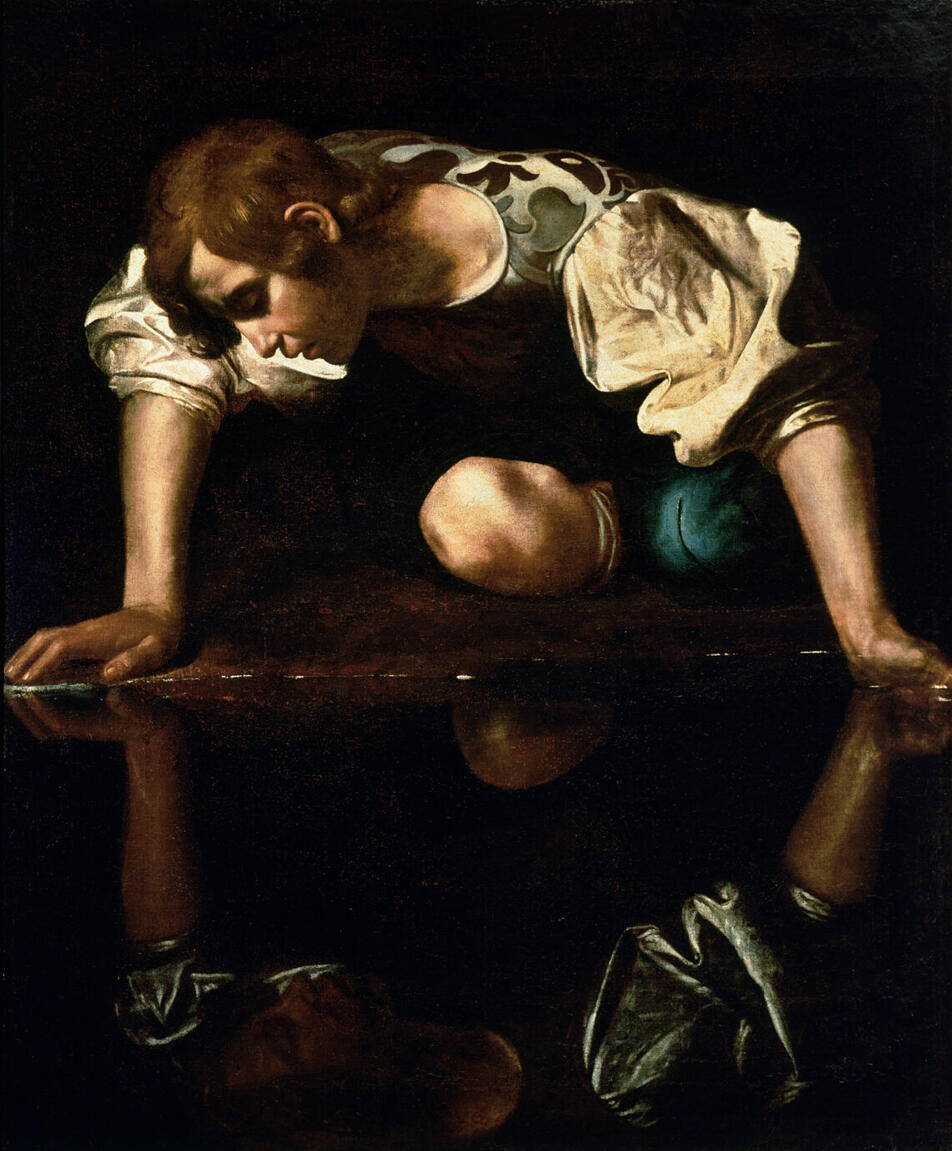
Painting by Caravaggio, titled Narcissus (c. 1597 – c. 1599.)
In 1899, German psychiatrist Paul Näcke coined the term 'narcissist,' from the German word narzissismus, originally suggested by sexologist Havelock Ellis, who used the words "Narcissus-like" to describe a disordered version of self-love. The word is taken from Narkissos, the name of a beautiful young man from the Greek myth "Echo and Narcissus", featured in Ovid's Metamorphosis [20]. Echo is a young nymph who falls in love with Narcissus, who later harshly rejects her advances. In response, "Echo's fellow nymphs prayed to Nemesis to punish Narcissus with a love that was equally not reciprocated. Nemesis caused him to fall in love with his own reflection in a pool of water where he wasted away and died, unable to take his eyes away from the beautiful youth he did not recognise as himself...All that was left of Narcissus was the six-petalled white flower arranged around a golden centre that was named after him" [21].The flower referred to in the story is now commonly known as a daffodil, scientific name narcissus [22]. This will later become the current symbol of narcissistic personality disorder used by the modern community of people with the disorder.
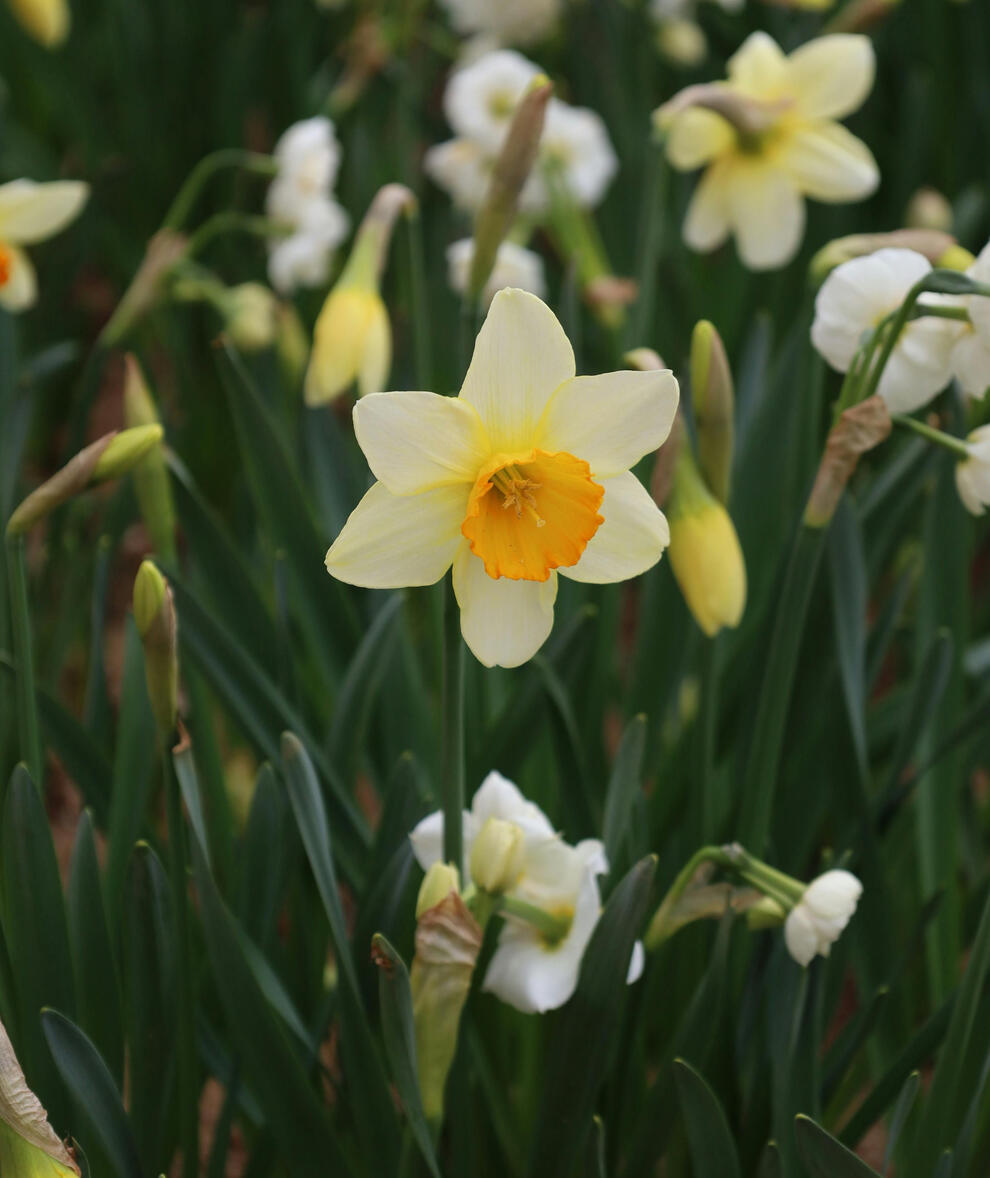
The narcissus flower, also known as a daffodil
The original usage and conception of the word 'narcissist' was much different than the current definition of the word. At the time of its coining, and for a while afterwards, it was considered a sexual perversion, a psychological behavior in which one's libido is directed at oneself rather than others [23]. Although the definition of 'narcissist' changed, the original meaning was also referred to as 'autoeroticism,' a concept also coined by Havelock Ellis, later evolving into the term 'autosexuality', which is now considered a sexual orientation rather than a psychological condition. In the LGBTQ+ community, the autosexual label is highly associated with asexuality, an oriention term used by people who feel little to no sexual attraction to other people. The modern conceptualization of asexuality greatly changed the way society and psychology viewed differences in sexuality, and may be largely related to the modern movement away from non-heterosexual sexualities as a disorder, but as a natural spectrum of human experiences [24].
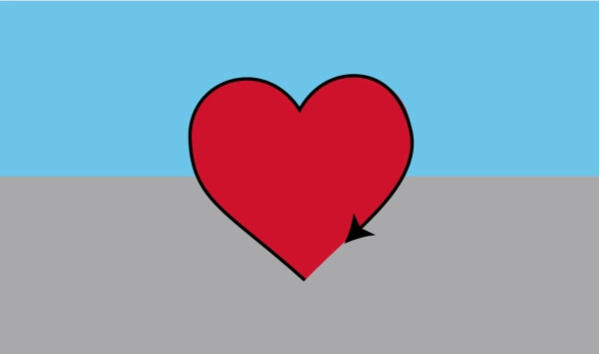
Autosexual flag
Design by unknown
Freud was one of the first psychologists to discuss narcissism in psychology, claiming that: "narcissism was a necessary intermediate stage between auto-erotism and object-love" [23]. In contrast, German psychologist Karen Horney was one of the first to suggest that narcissism was not inherent to human nature, but a learned behavior as a result of early environmental conditions, leading to the modern conception of the nature of narcissism. Later, in response to Freud and the development of narcissism as a concept, Peter Gay described in his book "Freud: A Life for Our Time", that our modern interpretations of narcissism have lead to an "inflation of meanings....Some in fact exploited it as a handy term of abuse for modern culture or as a loose synonym for bloated self-esteem." [23]. And this leads us to the present usage of the word and the way it has been reinterpreted in pop-psychology.
Societal usage
As Peter Gay explains, the modern societal perception of narcissism is one that has become distorted and separated from actual psychology. Although the current usage of narcissism in medical contexts has become mostly unbiased and well-informed, the term itself has caught on in communities that do not have a desire to follow scientific accuracy, preferring to utilize medical language to support their personal opinions without the research to back it.And thus enters the world of 'narcissistic abuse', a term used by some communities to describe a specific form of abuse inflicted from a narcissist onto a victim. Where this term falls flat is that it has been watered down immensely and become separated from actual psychology. The concept of 'narcissistic abuse' takes the role of diagnosis out of the hands of medical professionals and into the hands of the average person. It is the belief of this community that anyone can identify a narcissist, no matter if they have been trained to do so or if they have actively researched narcissistic personality disorder. This same community is also responsible for the coining of the derogatory term 'narc' to describe a person deemed a narcissist - regardless of whether or not they have been diagnosed.In a study on intimate partner violence (IPV) and narcissism, it was found that "...both cyber IPV and psychological IPV were significantly, positively, and weakly related to narcissism; however, no relationship was found between narcissism and physical IPV" [25]. These results essentially indicate that there is no proven connection between physical abuse and narcissism, and that the connection with cyber and psychological abuse is weak and not entirely conclusive. These same weak and conflicting results have been found in other studies as well: "This study was undertaken to investigate the effects on intimate violence...no support was found for threatened egoism" [26]. "While there were main effects of [lack of] empathy in each sample, empathy emerged as one of the weaker predictors [of IPV] in each sample" [27]. What this tells us is that narcissistic traits are not proven to be related to abuse in a high capacity, and that the belief in 'narcissistic abuse' greatly inflates statistics and uses an inaccurate idea of a 'narcissist' as a scapegoat for personal opinions and theories (just as is suggested by Peter Gay).
The Modern NPD Community
With the invention of the internet and the modern demonization of narcissism came the development of the NPD community, a subgroup of the online mental health community that consists of people who have or suspect they have narcissistic personality disorder. This community largely strives to combat stigma and create safe spaces for people with NPD to process their struggles without shame.The modern online mental health community has a significant tie to the online LGBTQ+ community, as well as other smaller communities such as the alterhuman/otherkin/therian/etc, genderqueer, and aromantic/asexual communities. In the LGBTQ+ community, the creation of flags to represent identities or orientations has spread to other online communities, the mental health and disabiled communities included. Below are the examples of the flags and symbols chosen to represent people with NPD. Both symbols feature a version of the daffodil, it's scientific name narcissus based on the myth of "Echo and Narcissus", which ends with Narcissus turning into a daffodil.

First edition of the NPD flag
Design by npdsafe on Tumblr

New NPD flag with symbol variant 1
Design by narcflag on Tumblr

NPD symbol variant 2
Design by isobug on DeviantArt
In online spaces, we have personally found that many people with NPD identify as a member of the LGBTQ+ community - both in sexuality and gender - as well as alterhumanity, the identification as or with a non-human. It has already been found that neurodivergence could also have a relationship with queerness and alterhumanity, and it is possible that narcissism has a relation similar to that as autism, as many people with autism and NPD feel like they are "not human" for one or multiple reasons. There is a significant amount of alterhumans with NPD that identify with or as a god, demon, or other spiritual being, highlighting how grandiosity can influence one's identification with humanity or lack thereof. It is important to note that there are no current studies on this realtionship, but I believe that it is worthy of discussion when understanding the modern online NPD community.As previously mentioned, we have also seen a significant relationship between NPD and aromaticism/asexuality. It is very likely that grandiosity and a lack of empathy have influences on attraction, as is supported by the early conception of narcissism as being a form of lack of attraction to others (rather, an attraction to oneself). Drawing another comparison to autism, it has also been suggested that many autistics are on the aromantic/asexual spectrum. This may tie back into the empathy deficit and hyperfocus on self that can be seen in both autism and NPD.This online NPD community has also greated a large collection of other NPD-related identities, flags, and terms, some also intersecting with queerness and alterhumanity.
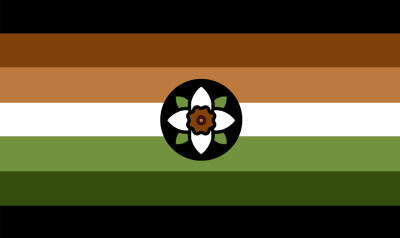
Aronarc: an arospec narcissist whose attachment is heavily influenced by their narcissism and aromanticism, so much so that a description of their attachment to others is incomplete without both
Coined by vaporwavevox and radiostaticsmile on Tumblr
Design by narc-rants on Tumblr

Narcissistic Deity/God: When your kinship with deities/gods is impacted by/intertwined with your narcissism
Coining and design by lairofsirenium on Tumblr

Respected Person: A person whom a narcissist holds respect for
Design by woodbyne on Tumblr
20. Origin and history of narcissism21. Echo and Narcissus22. Narcissus (plant)23. History of narcissism24. Autoeroticism25. Narcissism and Intimate Partner Violence: A Systematic Review and Meta-Analysis26. Intergenerational Transmission of Violence, Threatened Egoism, and Reciprocity: A Test of Multiple Psychosocial Factors Affecting Intimate Partner Violence27. Empathy and Threatened Egotism in Men’s Use of Violence in
Intimate Relationships
Terminology
NARCISSISTIC PERSONALITY DISORDER: Also referred to as NPD, a psychiatric disorder in the DSM-5-TR characterized by "a pervasive pattern of grandiosity, need for admiration, and lack of empathy" [1].NARCISSIST: Someone diagnosed with NPDNARCISSISM: A spectrum of traits exibited by those with and without NPDNPD TRAITS: When a person has or is diagnosed with traits of NPD, rather than the full disorderNARC: A derogatory term used to describe narcissists, also reclaimed by people with the disorder to refer to themselves
NARCISSISTIC SUPPLY: The "battery" or energy source that a narcissist needs to repeatedly fill to maintain their level of grandiosity. It presents as a constant need for attention, admiration, and validation that can become highly addictive and cyclical. When a person with NPD has low supply, they can fall into insecurity and become desperate to escape the feeling or fear of inferiority. Each individual with NPD seeks and fills their supply in different ways, some more destructive than othersNARCISSISTIC SPLITTING: When a narcissist has black and white thinking, switching back and forth between a belief that something or someone is "all good" or "all bad", often presenting as shifts between idealization and devaluationNARCISSISTIC ABUSE: The belief that abuse committed by a narcissist is different than the abuse committed by a non-narcissist. Also often accompanied by the belief that all narcissists are inherently bad people or downright evil. Most people with NPD reject this concept, arguing that it is not based in real psychology and contributes to fictitious stigma surrounding the disorder
AFFECTIVE/EMOTIONAL EMPATHY: The experience of being able to feel someone else's emotions. People with NPD have a deficit in or lack of thisCOGNITIVE EMPATHY: The experience of being able to identify and understand someone else's emotions. Many people with NPD have cognitive empathy, while others have a deficit in or lack of this tooCOMPASSION: The act of supporting someone else's emotions through words and/or actions. Compassion is a choice that anyone can make, regardless of their empathy or lack thereof
PERSON TYPES: A label given based on the type of attachment that a person with a personality disorder has to another person. Based on the more commonly used "favorite person" for those with BPDSUPPLY PERSON: A person whom a narcissist uses to get supply (abbreviated as SP)EQUAL PERSON: A person whom a narcissists considers or treats as an equal to themself (abbreviated as EP)CHOSEN PERSON: A person whom a narcissist values above all others, sometimes even above themself (abbreviated as ChP)RESPECTED PERSON: A person whom a narcissist holds respect for (abbreviated as RP)ADEQUATE PERSON: A person whom a narcissist considers adequate. Meant to be a "lesser variant" of EP or ChP (Abbreviated as AP)WORTHY PERSON: A person whom a narcissist considers worthy of being their equal (such as an EP), superior (such an a ChP), or otherwise (Abbreviated as WP)DEVALUED PERSON: A person whom a narcissist has lost value for, or devalued (Abbreviated as DP)
About the Website Creator
Who are we?
We are an adult system titled The Void System, but you may refer to us as Void. Our pronouns are void/it/he. Kindly do not refer to us as they/them, as those are not our pronouns. Our primary gender identity is agender and we are on the aroace spectrum.
Why did we make this database?
We are professionally diagnosed with Narcissistic Personality Disorder and wanted to create a collection of information that people can easily access to learn more about the disorder without being overwhelmed by the massive amounts of misinformation and uninformed stigma online.We have heard from many other people with NPD that researching this disorder is both difficult and upsetting, as internet searches often lead to information being published by communities of people who have an extremely negative opinion of what a narcissist is, rather than trained psychologists and people who have the disorder.
What other disorders do we have?
We have been diagnosed with many disorders by different psychologists, but we will list the primary ones that we believe are relevant to understanding us.- Narcissistic Personality Disorder
- Antisocial Personality Disorder *
- Dissociative Identity Disorder
- Autism Spectrum Disorder
- (Complex) Post Traumatic Stress Disorder
- Psychotic Disorder / Symptoms of Psychosis* We have been diagnosed with ASPD traits due to our psychologist believing it would be negative to give us both NPD and ASPD diagnoses officially, but it is generally agreed upon that we have ASPD
How can you see more from us?
Our Tumblr is @narc-rantsPLEASE...- DO NOT ask us for therapeutic advice. We cannot legally offer you paid sessions and we are not interested in being a sounding board for your trauma- DO NOT ask us to identify if someone you know is a narcissist. Only a trained and certified psychologist who has met the person themself is qualified to diagnose them- DO NOT bother sending us weird messages about how evil we are or how we need god. We are an atheistic Satanist and your threats and preaching is actually just a source of amusement for us. We suggest you save your breath for someone who cares
Our Informal Research Study
Our aim
To informally collect data on Narcissistic Personality Disorder and analyze patterns in the results. We do not make any claims that the data we collect will be accurate or that our data pool will be free of factors that may sway our results in ways that would not occur in a formal settingWE DO NOT ENCOURAGE THE USE OF OUR FINDINGS TO SUPPORT YOUR OWN STUDY, AS WE CANNOT GUARANTEE THE ACCURACY OF OUR RESULTS OR THE HONESTY OF OUR PARTICIPANTS
Hypotheses
We hypothesize that our results will support the following claims:The majority of our participants with NPD will...
- have experienced caregiver abuse
- identify as being on the aromantic spectrum
- identify as being on the asexual spectrum
- have been abused more than having inflicted it
- be against or conflicted by the concept of recovering from their disorderOf our participants with NPD who identify as alterhuman/otherkin/therian/etc, the majority will...
- identify with or as a diety, demon, or other spiritual beingOur participants with NPD who are also diagnosed with other cluster B disorders/traits will…
- be more likely to commit physical and sexual abuse of humans than those with only NPD
- be more likely to commit animal abuse than those with only NPD
The study
Our study is being conducted using a survey with a list of 25 questions, given to two groups of anonymous participantsSurvey one is for our sample group, those with professionally diagnosed NPDSurvey two is for our control group, those without NPD, NPD traits, or suspicion that they have itBoth surveys are identical, with the exception of necessary changes that do not impact the results
The surveys
If you would like to view the surveys or participate in the study, it is still ongoing and we are still accepting new participants to grow our sample sizeSURVEY ONE - only take this survey if you have been professionally diagnosed with NPDSURVEY TWO - only take this survey if you do not have NPD, NPD traits, or suspicion that you have it
Current findings
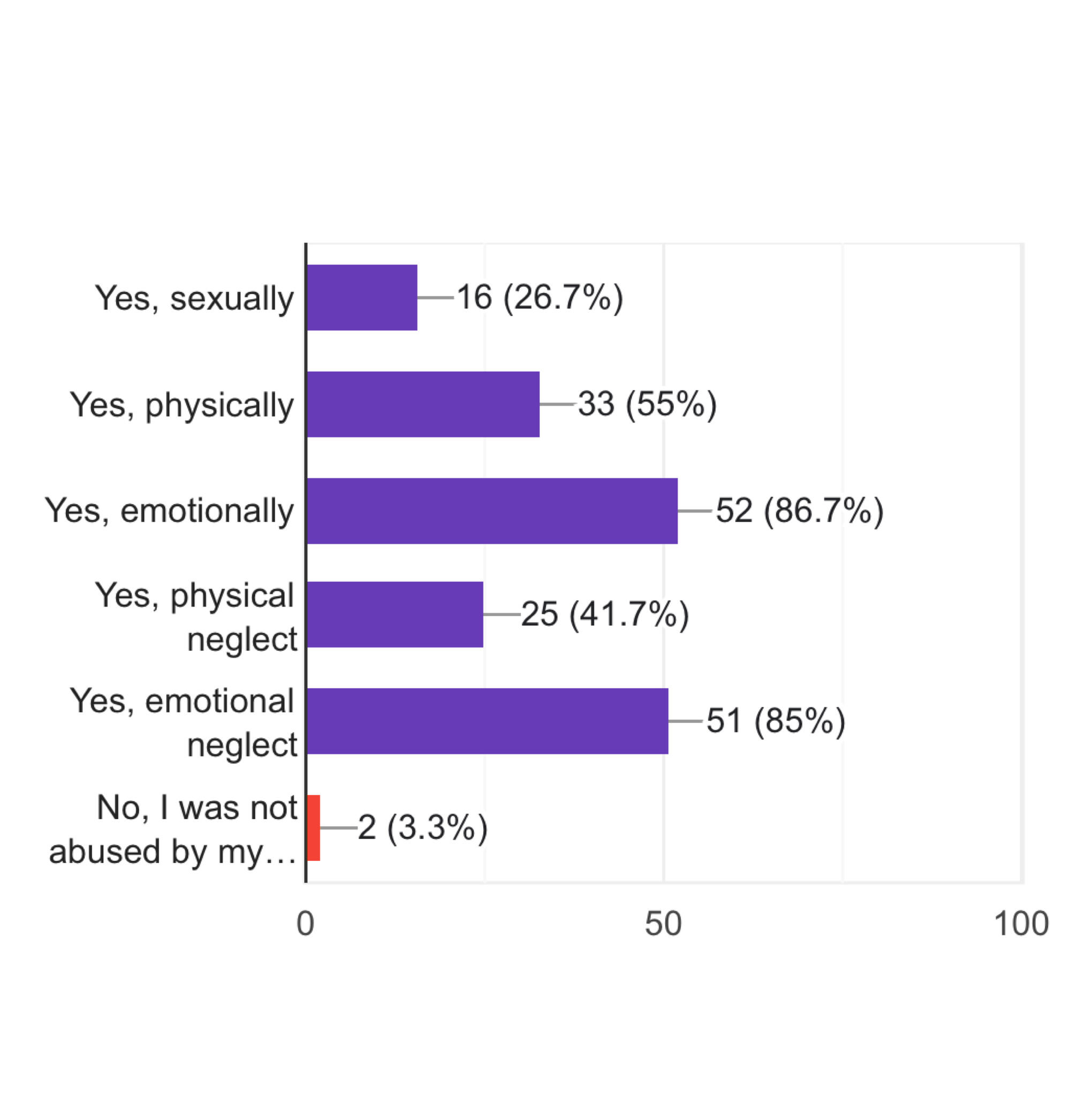
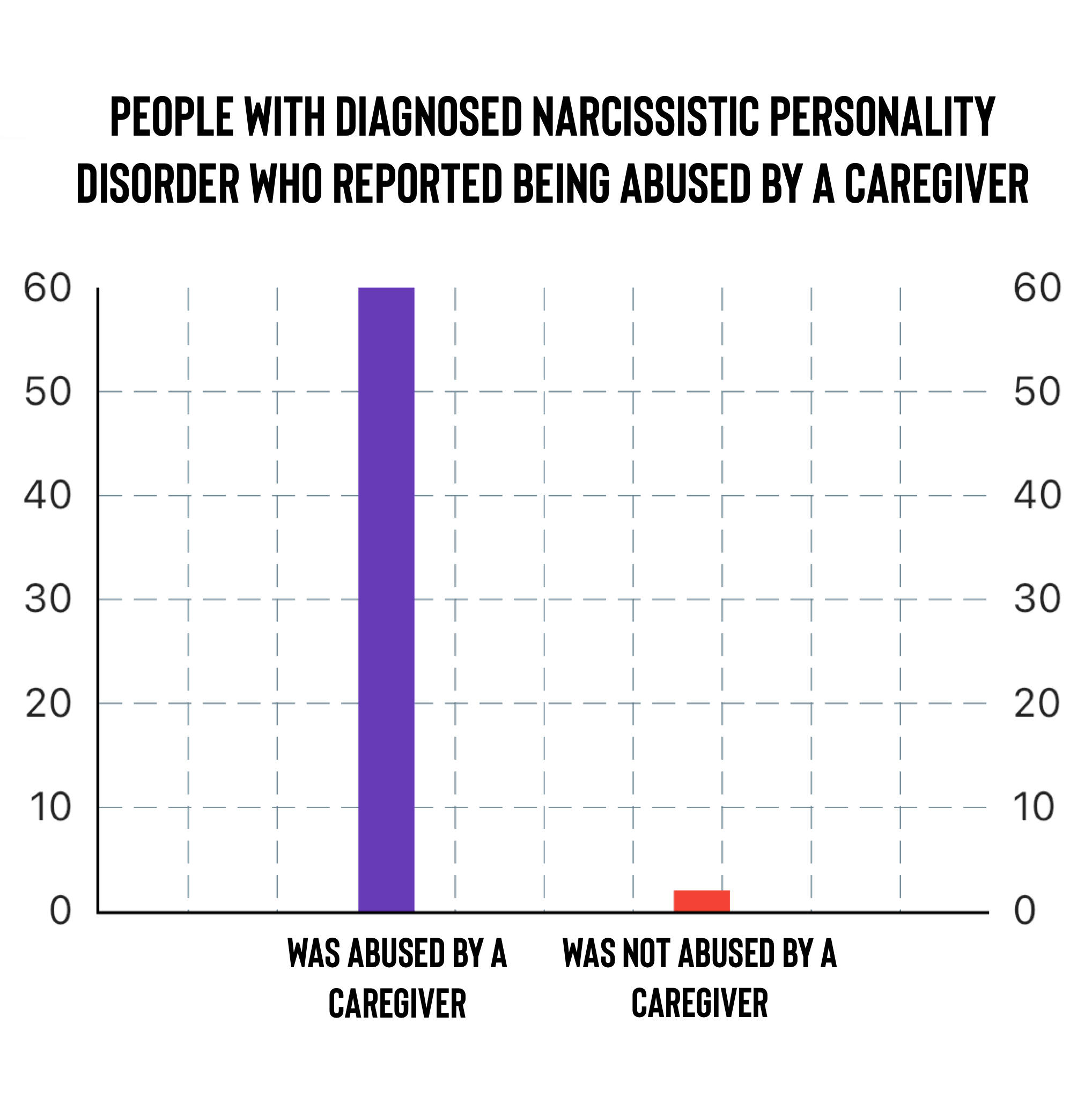
In question 18 of survey one, 60 participants were asked to choose one or multiple responses to the following question:
In my childhood, I was abused by my caregivers in one or multiple ways
Citations
We have made the decision to format our citations informally - in the form of website or PDF links - to make them more accessible to the average person who is not familiar with formats such as MLA and APA
1. NIH: Narcisstic Personality Disorder2. ICD-11 Classification of Mental and Behavioral Disorders3. Personality Disorders in Modern Life by Theodore Millon4. Subtypes, Dimensions, Levels, and Mental States in Narcissism and Narcissistic Personality Disorder by Kenneth N. Levy5. Mayo Clinic: Narcissistic Personality Disorder6. Adverse childhood experiences leading to narcissistic personality disorder: a case report7. A Behavioral Genetic Study of Intrapersonal and Interpersonal Dimensions of Narcissism8. Can neuroscience help to understand narcissism? A systematic review of an emerging field9. Healing the next generation: an adaptive agent model for the effects of parental narcissism10. DSM-5-TR11. Differentiating Narcissistic and Antisocial Personality Disorders12. Prevalence, Correlates, Disability, and Comorbidity of DSM-IV Borderline Personality Disorder: Results from the Wave 2 National Epidemiologic Survey on Alcohol and Related Conditions13. Clinical Characteristics of Comorbid Narcissistic Personality Disorder in Patients with Borderline Personality Disorder14. Associations Between Four Types of Childhood Neglect and Personality Disorder Symptoms During Adolescence and Early Adulthood: Findings of a Community-Based Longitudinal Study15. Personality Disorders Associated with Full and Partial Posttraumatic Stress Disorder in the U.S. Population: Results from Wave 2 of the National Epidemiologic Survey on Alcohol and Related Conditions16. Narcissistic Personality Disorder: Symptoms, Diagnosis & Getting Help17. Traits of narcissistic vulnerability in adults with autism spectrum disorders without intellectual disabilities18. Autism, Adverse Events, and Trauma19. 20 Narcissistic Personality Disorder Statistics for 202520. Origin and history of narcissism21. Echo and Narcissus22. Narcissus (plant)23. History of narcissism24. Autoeroticism25. Narcissism and Intimate Partner Violence: A Systematic Review and Meta-Analysis26. Intergenerational Transmission of Violence, Threatened Egoism, and Reciprocity: A Test of Multiple Psychosocial Factors Affecting Intimate Partner Violence27. Empathy and Threatened Egotism in Men’s Use of Violence in
Intimate Relationships